 By admin
 Menopause and Weight Gain: What’s Hormones vs Habits

Introduction: The Scale That Suddenly Won’t Budge
The number on the scale can start creeping up in midlife, even when routines haven’t changed much.
For many women, this shift appears around the menopausal transition, bringing frustration and self-doubt along with physical changes.
Research shows that a large share of women notice weight gain during this phase of life 1. That raises a fair question: how much of this change is driven by hormones, and how much comes down to daily habits?
Biology plays a role, but it doesn’t act in isolation 2.
As a PMC study notes:
“Weight gain affects 60%–70% of middle-aged women during the menopausal transition.” 3
What You’ll Learn in This Article
You’ll see how hormonal shifts during perimenopause are associated with changes in metabolism and body composition, creating conditions that can make weight management harder 2.
You’ll also learn why habits and environment matter, particularly for women in India where lifestyle patterns can amplify these changes 4.
Finally, the article outlines what realistic, evidence-linked goals look like for managing weight during menopause, without extreme expectations 5.
The Hormone Side: What Changes During Perimenopause
Estrogen, Metabolism, and Energy Use
During perimenopause, changes in estrogen levels are linked with lower energy expenditure and a reduced resting metabolic rate 2.
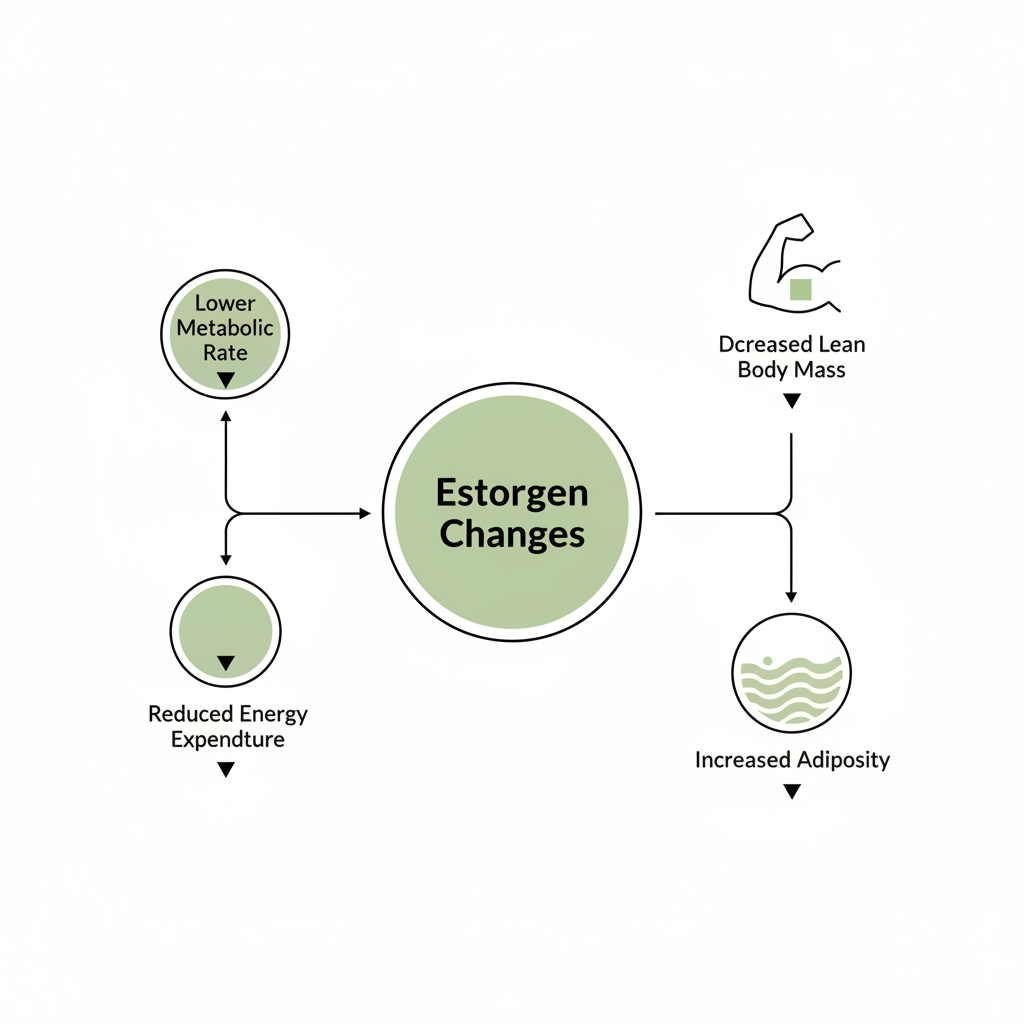
This means the body may burn fewer calories at rest than it did earlier in adulthood.
Unsurprisingly, weight gain is commonly reported among middle-aged women during this transition 1.
Muscle Mass and Body Composition Shifts
Hormonal changes are also associated with shifts in body composition.
Perimenopausal women tend to experience increased adiposity alongside decreased lean body mass 6.
Separately, muscle mass is known to decline by about 3% to 8% after age 30, which affects overall energy needs 7.
Together, these changes can lower the body’s baseline calorie requirements.
Why Indian Women May Feel It Earlier
In India, menopause tends to occur around four to five years earlier than in many Western countries 8.
An earlier transition can mean a longer period of exposure to these physiological changes, which may make weight-related concerns feel more pronounced over time 8.
The Habits Side: Lifestyle Factors That Add Up
Daily Routines and Urban Living
Hormones are only part of the picture.
Obesity is also associated with lifestyle shifts, high stress, and sedentary routines, particularly among urban Indian women 4.
National reporting shows that nearly 50% of Indian women aged 35–49 are overweight or obese, underscoring how common these challenges are 9.
Environment and Access
Urban environments can further shape daily habits.
Data indicate that 33.5% of urban women in India are living with obesity 10.
Limited time, long commutes, and reduced access to safe activity spaces can amplify the effects of hormonal changes, making weight management more complex 4.
Hormones vs Habits: It’s Not Either–Or
Weight changes during menopause are best understood as an interaction between physiological changes and lifestyle factors 2.
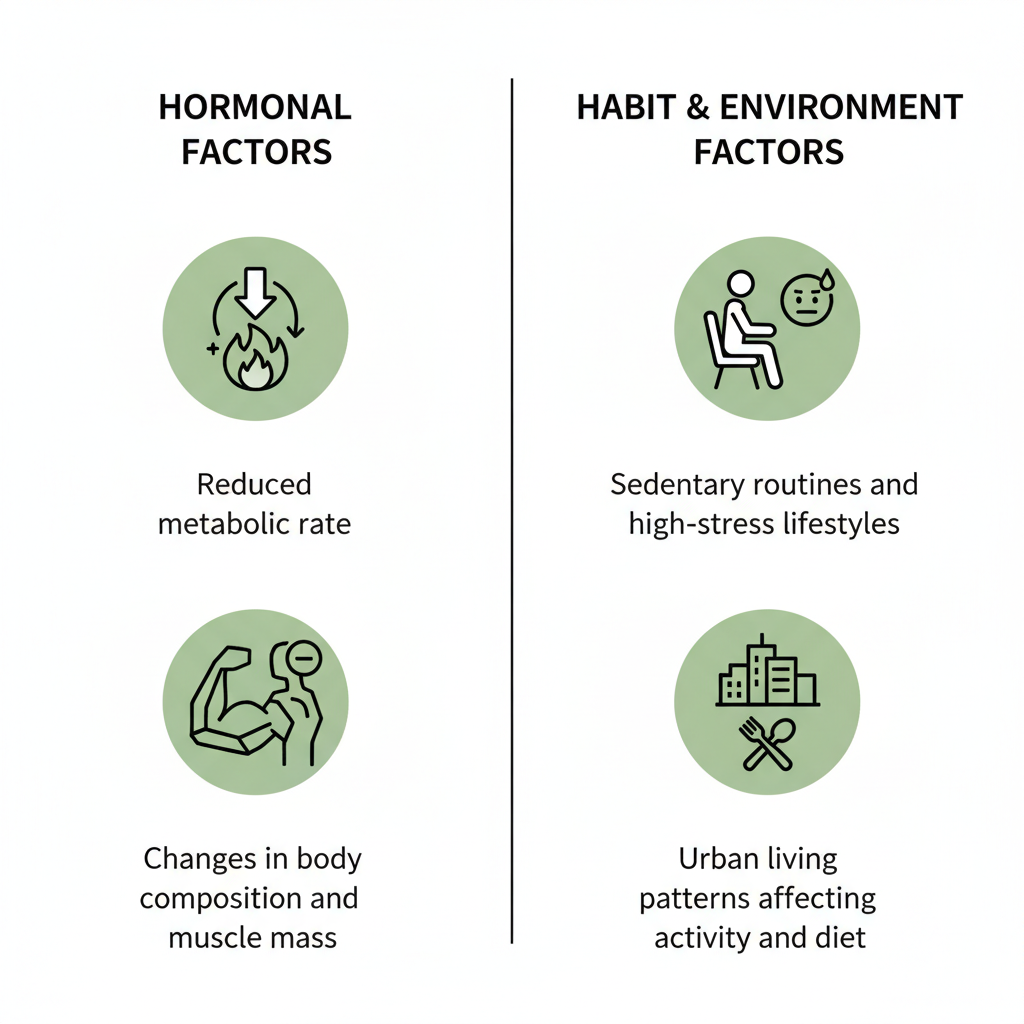
Hormones may set the stage, but habits influence how strongly those changes show up in daily life.
It’s also important to remember that experiences vary widely—while many women report weight gain, not everyone does 1.
| Hormonal Factors | Habit & Environment Factors |
|---|---|
| Reduced metabolic rate during perimenopause 2 | Sedentary routines and high-stress lifestyles 4 |
| Changes in body composition and muscle mass 6 | Urban living patterns affecting activity and diet 10 |
Practical Steps: A Grounded Checklist
What Evidence Suggests Can Help
Evidence links modest weight reduction—through balanced diet and regular activity—with improved quality of life during menopause 5.

Lifestyle changes are often positioned as a cornerstone approach, working alongside awareness of hormonal shifts rather than against them 4.
A simple, grounded checklist:
- Pay attention to daily movement, even in short bouts
- Aim for consistent, balanced meals rather than extremes
- Track small changes in energy or strength, not just weight
- Revisit routines as life circumstances change
Setting Realistic Expectations
There is no single “normal” outcome during menopause.
Experiences differ widely, and variability is the rule rather than the exception 1.
Setting flexible expectations can reduce frustration and help sustain healthier habits over time.
Common Mistakes to Avoid
One common mistake is assuming weight gain is solely due to hormones and overlooking daily habits that also matter 4.
Another is believing that menopause-related weight gain is inevitable for everyone, when evidence shows that modest, achievable changes are possible 5.
Many women also wait until postmenopause to act, even though changes often begin earlier, during perimenopause 2.
FAQs: Menopause Weight Gain Answered
Frequently Asked Questions
How much weight do women typically gain during menopause?
Studies report that about 60%–70% of middle-aged women experience weight gain during the menopausal transition, though the amount varies widely from person to person 1.
Does menopause cause belly fat?
Perimenopause is associated with increased adiposity and reduced lean mass, which can influence where fat is stored, but individual patterns differ 6.
Can diet prevent menopausal weight gain?
Diet is one of several lifestyle factors linked with weight outcomes. Balanced eating patterns are often discussed alongside activity and stress management rather than as a single solution 4.
What exercises help with menopause weight?
Regular physical activity is commonly included in lifestyle approaches to support modest weight reduction and quality of life during menopause 5.
Are there menopause supplements for weight management in India?
Supplements are part of the broader menopause market in India, but lifestyle changes are often described as the foundation, with other options considered on an individual basis 4.
When does perimenopause start for Indian women?
Because menopause tends to occur earlier in Indian women, perimenopause may also begin earlier compared to Western populations 8.
How does estrogen affect metabolism?
Changes in estrogen during perimenopause are associated with reduced energy expenditure and resting metabolic rate, which can affect weight regulation 2.
Is weight gain reversible after menopause?
Evidence links modest weight reduction with improved quality of life, suggesting changes are possible, though outcomes vary 5.
What role does muscle mass play in menopausal weight?
Declines in muscle mass after age 30 can lower energy needs, influencing weight during midlife 7.
How common is obesity in perimenopausal Indian women?
Nearly half of Indian women aged 35–49 are reported to be overweight or obese, reflecting both hormonal and lifestyle influences 9.
Does early menopause mean more weight gain?
Earlier menopause can mean longer exposure to metabolic changes, but individual experiences still vary 8.
What are NFHS-5 obesity stats for Indian women?
NFHS-5 data report that 33.5% of urban women in India are living with obesity 10.
Can 5% weight loss improve menopause symptoms?
A 5–10% reduction in body weight has been linked with improved quality of life through diet and exercise 5.
How to balance hormones and habits for weight control?
Weight changes during menopause are understood as an interaction between physiological changes and lifestyle factors, rather than one or the other 2.
What is the average menopausal age in India?
Menopause in Indian women occurs around four to five years earlier than in Western countries 8.
Conclusion: Reframing the Conversation
Menopause-related weight gain is a shared but highly variable experience.
Many women notice changes during the transition 1, yet those changes are shaped by both hormones and habits.
Reframing the conversation away from blame and toward understanding can make space for more compassionate, informed choices.
This article is for general information only and is not medical advice.
Call to Action
If you’re navigating weight changes around menopause, you’re not alone—and confusion is common.
This week, consider observing one small routine, like daily movement or meal timing, and note how it fits into your current life.
If this article resonated, share it with someone who might be asking the same questions, or save it for later reflection.
And if symptoms feel disruptive, a conversation with a qualified clinician can help you explore options suited to your situation.
References
Facts and Stats
- Estrogen and Metabolism: Navigating Hormonal Transitions from … – PMC – 2025-01-01
- Estrogen and Metabolism: Navigating Hormonal Transitions from … – PMC – 2025-01-01
- Estrogen and Metabolism: Navigating Hormonal Transitions from … – PMC – 2025-01-01
- Nearly 50% of Indian women aged 35–49 are overweight or obese – Times of India – 2025-06-15
- Nearly 50% of Indian women aged 35–49 are overweight or obese – Times of India – 2025-06-15
- Estrogen and Metabolism: Navigating Hormonal Transitions from … – PMC – 2025-01-01
- Menopause Statistics 2025 – the latest facts and stats – Chemist-4-U – 2025-01-01
- India Menopause Market Size & Outlook, 2025-2030 – Grand View Research – 2025-01-01
- Nearly 50% of Indian women aged 35–49 are overweight or obese – Times of India – 2025-06-15
- Nearly 50% of Indian women aged 35–49 are overweight or obese – Times of India – 2025-06-15